
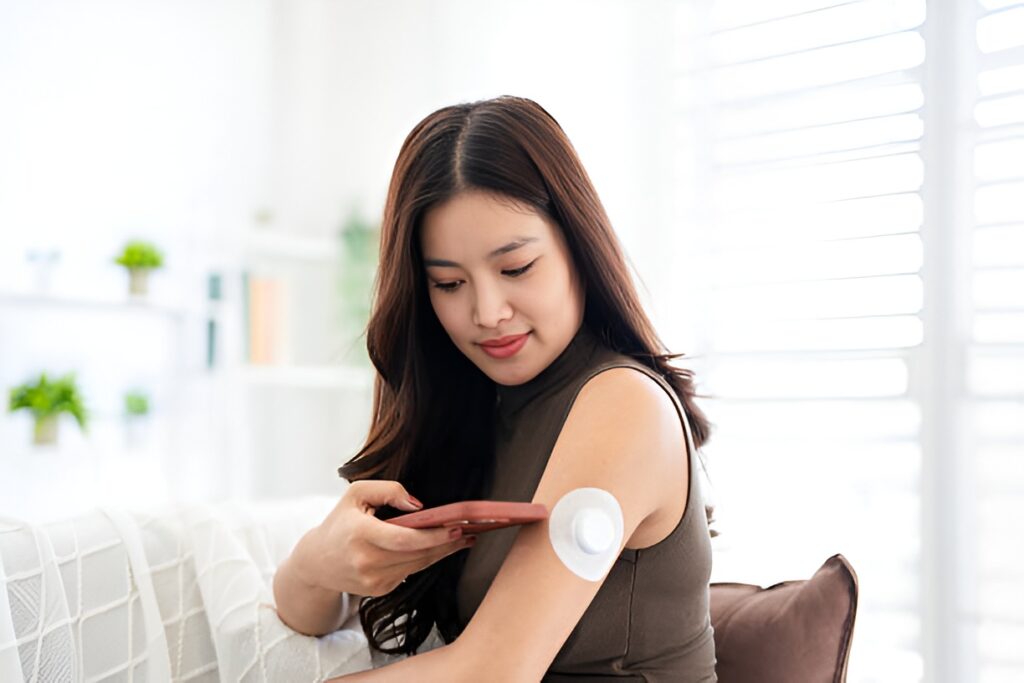
You checked your glucose before lunch, and the number looked fine. By mid-afternoon, you could barely concentrate, and you had no idea why. That gap between your last reading and what your body was actually doing is exactly what standard monitoring misses. If you’re managing diabetes but still get caught off guard by how you feel, a CGM medical device could be the missing piece.
The Gap That Standard Testing Cannot Fill
Traditional finger-prick testing gives you a single data point, one moment in time. But blood glucose moves constantly throughout the day in response to meals, stress, movement, and sleep. Between fixed testing times, a great deal can happen without you knowing.
The Ministry of Health Malaysia’s National Diabetes Registry Report 2023 recorded a mean HbA1c of 7.7 per cent among registered diabetes patients. Only 34.38 per cent achieved the clinical target of 6.5 per cent or below. That gap reflects months of glucose patterns that twice-daily testing simply cannot capture.
Managing a chronic condition with incomplete data leads to reactive decisions. You adjust after something goes wrong rather than preventing it. The pattern continues until a tool gives you visibility across the full day, not just two fixed snapshots.
What a CGM Medical Device Actually Does
A CGM medical device closes that gap. It is a small wearable sensor that reads your glucose automatically every few minutes, giving you and your care team a continuous, accurate picture of how your levels move across the entire day. Clinical decisions become evidence-based rather than guesswork. Your physician can act before a problem develops rather than reviewing it at your next quarterly appointment.
What a CGM Medical Device Gives You
- Continuous readings every 5 to 15 minutes. Your data runs in the background, day and night, without waiting for a scheduled test.
- Trend arrows alongside every reading. Where your glucose is heading is often more important than the number itself. Dropping fast means you can act before reaching a low.
- Many glucose disturbances happen during sleep and go undetected for months. CGM captures what happens when you are not watching.
- After a few days on the sensor, you can see exactly how your glucose responds to nasi kandar versus chicken rice, or teh tarik versus plain water. That specificity is not possible with standard testing.
- Your care team can access trends remotely and reach out if something concerning appears before your next appointment.
- Reduced anxiety around results. Continuous visibility means a single unexpected reading feels far less alarming. You have the context to understand it.
What Members Notice When They Switch to CGM
Members using CGM report a significant reduction in guesswork. They know which meals spike their glucose. They understand why a stressful workday shifts their numbers. They sleep better knowing overnight readings are being tracked. The mid-afternoon crash stops being a mystery. For working Malaysians who cannot structure their day around fixed testing times, CGM provides clinical-grade monitoring that runs alongside their routine rather than requiring them to stop and check.
CGM as Part of Physician-Led Care at Seraya Health
A CGM medical device does not replace your physician or your medication. It enhances both. When your care team has access to real-time glucose data, every consultation becomes more specific, more targeted, and more likely to produce adjustments that actually shift your results. Seraya Health integrates CGM into its physician-led programme so your monitoring drives clinical decisions rather than sitting in a folder no one ever opens.
Real-Time Data Solves a Problem
Diabetes does not pause between appointments. Your glucose moves every hour in response to what you eat, how you sleep, and how stressed you are. A CGM medical device gives you and your physician the data needed to manage your condition at the right time, connected with a care plan that actually responds to what your body is doing.
See What Your Glucose Is Doing Right Now
Seraya Health’s CGM-supported programme connects real-time glucose data with physician-led care. Start your health assessment at Seraya Health and find out how continuous monitoring can change your management today.
Frequently Asked Questions
Q1. Is a CGM medical device painful to wear?
Most sensors use a small, thin filament placed just under the skin. The majority of users report minimal discomfort after initial application and quickly stop noticing the device is there.
Q2. How long does a CGM sensor last before it needs replacing?
Depending on the device, sensors typically last between 10 and 14 days. Your care team will advise on the right replacement schedule for your programme.
Q3. Do I still need clinic visits if I use a CGM medical device?
Yes. CGM data is most valuable when reviewed by a physician who can interpret trends and adjust your care plan. The device informs your care. It does not replace it.