
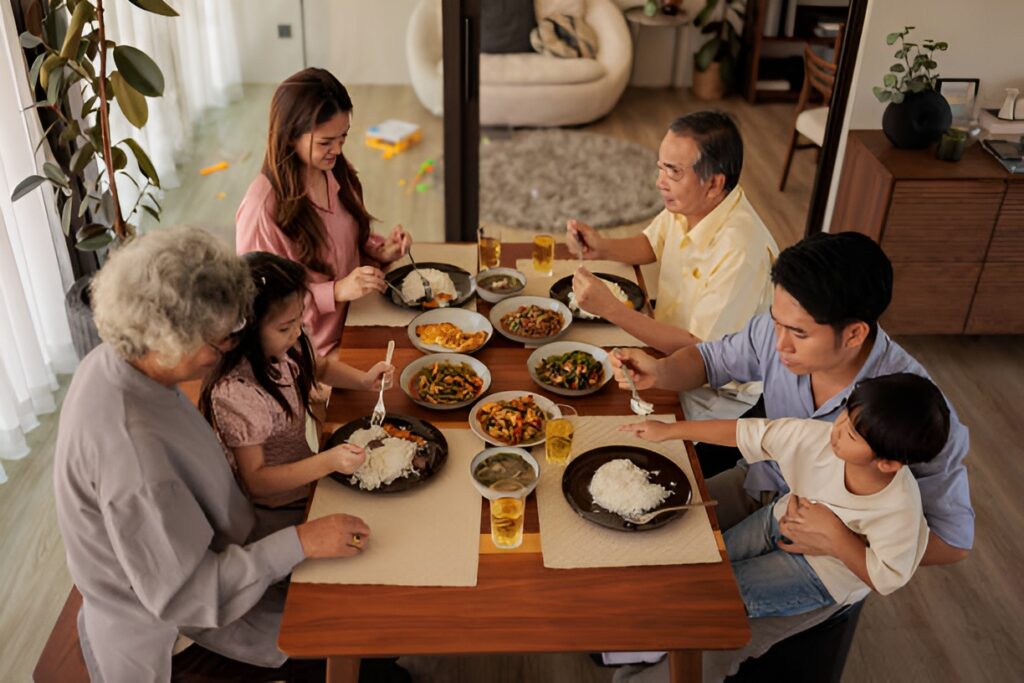
You are at a family lunch. Your mother made rendang and rice. Your brother ordered roti canai on the side. And you are sitting there quietly calculating whether this meal will cost you a glucose spike and a bad reading tonight. Diabetes nutrition management in Malaysia is not simply about following a list of forbidden foods. It is about finding a sustainable way to eat in a culture that is rich, communal, and deeply tied to local ingredients, without turning every family meal into a risk assessment.
Why Standard Meal Plans Fail Malaysian Patients with Type 2 Diabetes
Most diabetes nutrition guidelines were developed for dietary patterns that bear little resemblance to how Malaysians eat. They recommend whole grains, lean proteins, and low-glycaemic fruits. These principles are broadly correct. But none of them accounts for nasi lemak at 7 a.m., economy rice with multiple sides at lunch, teh tarik at every mamak stop, or a Hari Raya spread that begins at 11 a.m. and continues well into the evening.
According to the 2019 National Health and Morbidity Survey, 18.3% of Malaysian adults live with diabetes, and dietary habits consistently rank among the primary modifiable risk factors. A nutrition programme that ignores the food culture it operates within will not be followed. And a plan that is not followed does not work, regardless of how clinically sound it looks on paper.
How CGM Transforms Diabetes Nutrition from General Rules to Personal Data
Continuous glucose monitoring changes diabetes nutrition management from a set of broad recommendations into a data-driven, personalised process. Most people with Type 2 diabetes already know that white rice raises blood sugar. What CGM shows you is how much your glucose rises after your specific portion of nasi goreng, on a particular day, following a disrupted night compared to a full night’s sleep. That level of individual precision is what separates a CGM-guided nutrition programme from a standard dietary consultation.
Your body’s glucose response is genuinely unique. The food choices that drive spikes in one person may barely affect another with the same diagnosis. Basing your nutrition decisions on population averages rather than your own sensor data is the reason so many well-intentioned dietary changes produce disappointing results.
What a Personalised Type 2 Nutrition Programme at Seraya Health Covers
Seraya Health’s approach to nutrition management for Type 2 diabetes builds around your CGM data, your existing food preferences, and your actual daily schedule. It begins with a two-week baseline monitoring period that establishes how your body currently responds to your typical meals, eating times, and food combinations. This baseline forms the foundation for everything that follows, because recommendations grounded in your own data are far more actionable than general guidelines.
Your physician then reviews your glucose patterns to identify the specific triggers driving elevated readings, whether that is sweetened drinks, late-night carbohydrates, particular portion sizes, or the timing of your meals rather than their content. The programme does not work by removing foods you enjoy. It works by showing you how to eat them differently. Adding protein or vegetables before carbohydrates, for example, produces a measurably lower glycaemic response from a typical Malaysian meal without requiring you to skip anything on the table.
Nutritional gaps identified through your CGM data and physician review are addressed with targeted, evidence-based supplements where relevant. Recommendations update as your glucose data improves and your habits shift. Your care plan reflects where you are now, not where you started six months ago.
What Members Report After Three Months of CGM-Guided Nutrition
Members following CGM-guided nutrition plans consistently report more stable energy throughout the day, fewer post-meal crashes in the afternoons, and noticeably less anxiety around food during social events. Understanding what your body responds to changes your relationship with meals from guilt-driven restriction to informed decision-making. That shift tends to hold over time in a way that strict elimination diets do not.
The goal is not a perfect diet. It is a sustainable pattern of choices that fits your actual life, built around the food culture you belong to, not a version someone else prescribes for you.
Better control without changing who you are.
If you manage Type 2 diabetes and the nutrition advice you have received so far has not translated into real change, book an assessment with Seraya Health. The programme starts with your data and builds from there.
Frequently Asked Questions
In most cases, yes. The programme aims to understand your body's specific response to rice within a complete meal, then adjust portion size and food pairing accordingly. Complete elimination of staple foods is rarely the answer and is rarely sustainable in a Malaysian food culture.
Most members notice improvements in post-meal glucose readings within the first two to three weeks of making targeted adjustments. HbA1c changes typically become visible at the three-month mark, which aligns with the quarterly monitoring built into the programme.
The nutritional principles remain similar, but clinical monitoring integrates more closely when medication is part of your treatment. Your physician will review how your CGM data interacts with your current medication and adjust recommendations accordingly, so dietary changes and medical management work in the same direction.