
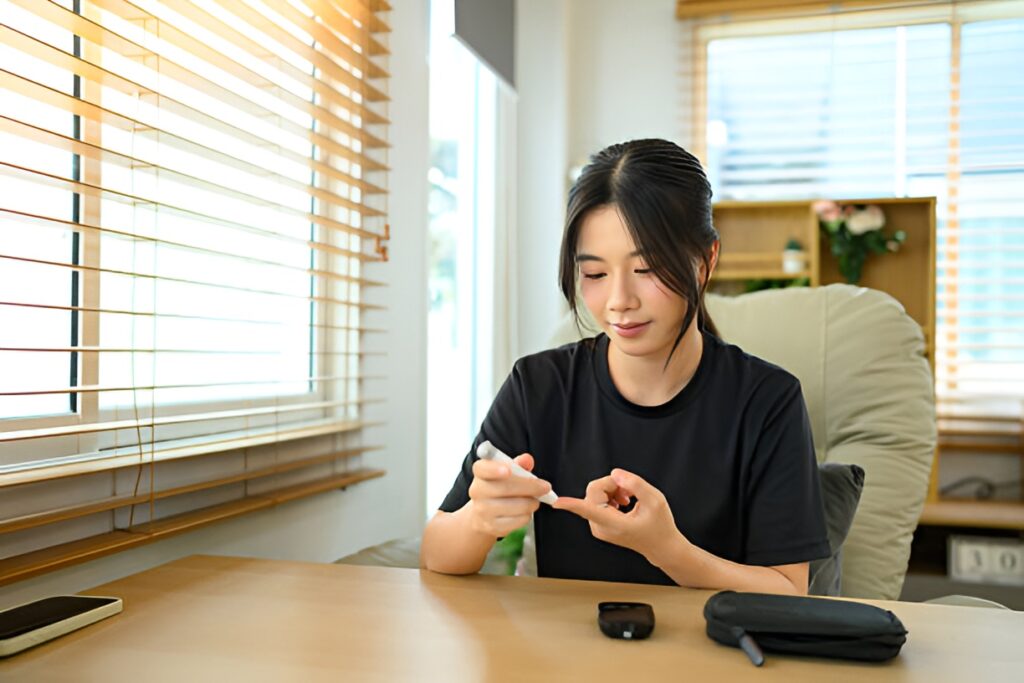
The doctor’s message is short. Your HbA1c is above range; watch your diet. For many people searching for how to reduce HbA1c without medication in Malaysia, this is where the confusion usually starts. The number feels abstract, the advice feels vague, and the next steps aren’t clear at all.
You’re left wondering whether this means daily pills for life or whether there’s still room to change course through habits alone. Honestly, it depends on your current number, your history, and how consistently you act on the changes you make. That’s a conversation worth having with real data, not a guess formed during a rushed five-minute clinic visit.
What That HbA1c Number Is Actually Measuring
HbA1c reflects your average blood glucose over the past two to three months, not a single meal or one stressful afternoon. A high reading usually builds up gradually, shaped by diet, activity, sleep and stress working together over time. That’s exactly why it tends to respond well to sustained lifestyle change, and not to a prescription alone.
Unlike a fasting glucose test, which captures a single moment, HbA1c tells a longer story, and that’s both the challenge and the opportunity. Nationally, the picture is sobering. Approximately 34.38% of the population in Malaysia have elevated HbA1c levels above 6.5%, the threshold used to diagnose diabetes, according to a study utilising Malaysia-specific data. Small, inconsistent efforts rarely move this number. Steady daily habits, tracked and adjusted over weeks, usually do.
If you’re in the early stages of prediabetes, recently diagnosed, or watching your HbA1c creep up slowly over the years, you probably have the most room to shift course without medication, provided the changes stay consistent and properly guided.
How Seraya Health Supports a Lifestyle-First Approach
Think of this as a structured, physician-guided pathway rather than a substitute for medical care. Through Continuous Glucose Monitoring and regular clinical review, Seraya Health help you understand precisely which daily habits move your number, and by roughly how much.
Four Habits We Help You Track and Adjust
- Pattern recognition through CGM: Seeing how a specific meal, a stressful meeting, or a poor night’s sleep affects your glucose in real time makes cause and effect obvious rather than something you’re left guessing at.
- Structured movement guidance: Building activity into a realistic weekly routine that accounts for OT and long shifts rather than demanding hours you don’t have.
- Physician-led progress reviews: Regular check-ins with a specialist mean your approach adjusts as your body responds, instead of sitting fixed for months.
- Sleep and stress tracking: Both affect glucose control directly and deserve to be treated as part of the plan rather than an afterthought to diet and exercise.
What Lowering HbA1c Naturally Actually Looks Like
For someone newly diagnosed, this often means avoiding medication altogether, provided changes start early and stay consistent. Managing prediabetes becomes a clear, trackable path with real numbers instead of vague encouragement to eat better. Busy professionals finally understand why a difficult week at work shows up in their glucose readings almost as clearly as dinner does.
If you’ve already tried cutting carbs or skipping meals with little to show for it, the missing piece was rarely willpower. Know your numbers, change your future is more than a nice phrase here. It’s the difference between guessing at what your body needs and actually seeing it laid out in front of you, reviewed by someone qualified to interpret it properly.
We won’t pretend a lifestyle-first approach is easier than a prescription, because it usually isn’t. What it offers instead is clarity: real data showing whether your changes are working, reviewed by a specialist who adjusts your plan as you go. Reducing HbA1c without medication is possible for many people, though it depends on consistency, the right guidance, and a way to actually measure whether your effort is paying off.
There’s also a middle ground worth mentioning. Some people reduce their dosage over time rather than eliminating medication, and that’s still a meaningful outcome. A lower number, achieved through habits you actually understand, still counts as real progress even if a small prescription remains part of the picture.
If your HbA1c result left you with more questions than answers, a structured, data-led approach can help you find what fits your body. Book a consultation with Seraya Health and start building a plan around your own numbers.
Frequently Asked Questions
For many people, particularly those with prediabetes or early-stage diabetes, sustained changes to diet, movement, sleep and stress management can meaningfully lower HbA1c. Results vary by individual, which is why professional guidance matters throughout.
Since HbA1c reflects a two to three month average, most people need at least that long of consistent habits before a meaningful shift shows up in a repeat test.
Yes, though any changes should be made alongside your doctor. Seraya Health's role is to support and inform your existing care, not replace medical supervision or override a prescription.