
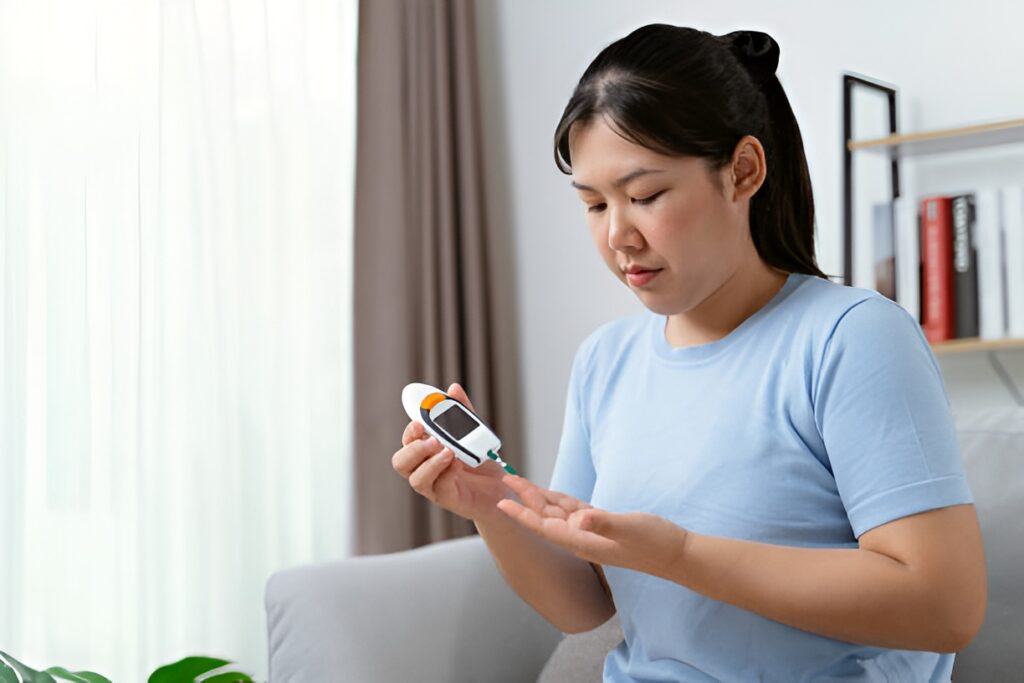
The report gives you a number and a reference range, but not much context. Maybe it’s slightly elevated. Maybe it’s still within range, but edging closer to the limit than you’d like. Either way, you leave the clinic with a printout and a vague sense that something needs attention, but no real explanation of what a fasting sugar test actually reveals about your day-to-day health.
This gap between getting a result and understanding it is one of the most common frustrations people describe once they start paying closer attention to their metabolic health. A number without context isn’t much use to anyone, yet that’s often exactly what people are left holding.
One Frame from a Much Longer Film
A fasting sugar test measures your blood glucose after around eight hours without food, giving you a clear picture of how your body manages sugar between meals and overnight. It’s a valuable starting point, but it’s only one frame from a much longer film. It can’t show you how your glucose behaves after meals, during a stressful workday, or overnight while you sleep.
This limitation matters more than most people realise, and Malaysia’s own data shows the scale of it. A nationwide analysis based on National Health and Morbidity Survey findings recorded impaired fasting glucose, an early warning sign before diabetes, in 22.6% of Malaysian adults tested, with the highest rates among those aged 60 and above. Many of these individuals had no symptoms at all.
People with a family history of diabetes, those carrying extra weight around the midsection, and anyone whose lifestyle has grown more sedentary over the years tend to show impaired readings well before any obvious symptoms appear. That’s why the number on a single test matters less than what you do after you read it.
It’s worth remembering that impaired fasting glucose isn’t the same as diabetes. It’s an early signal, a chance to act while the body still has room to recover its normal rhythm. Treated as a warning rather than a verdict, it can be one of the more useful numbers you receive all year, if someone actually explains what it means and why it matters right now rather than months down the line.
Filling In the Rest of the Picture
Rather than relying on a single fasting sugar reading, we help you understand the broader pattern behind that number. Using Continuous Glucose Monitoring, we track how your glucose levels change throughout the day, providing a more complete picture of how your body manages glucose beyond a single test result.
How We Help You Make Sense of the Number
- Context beyond the single number: We connect your fasting result to a broader glucose pattern, so you know whether it reflects a passing dip or a consistent trend worth addressing properly.
- Early risk identification: Continuous monitoring can flag fluctuations well before they’d show up as a formal diagnosis, giving you a genuine head start rather than a warning after the fact.
- Physician interpretation: A specialist reviews your results with you directly, translating the clinical numbers into guidance you can actually use.
- A clear next step, not just a printout: Depending on what the pattern shows, that might mean a dietary adjustment, more movement worked into your week, or further testing to confirm what the data is suggesting.
Why the Story Around the Number Matters
Catching a borderline result early gives you more room to act when small changes can still make a significant difference over time. If diabetes runs in your family, you get proactive answers instead of waiting around for symptoms to show themselves. If you’ve felt dismissed before with a quick “it’s fine, just watch your diet,” here you’re taken seriously and handed an actual path forward.
For anyone whose schedule leaves little room for follow-up appointments, this kind of clinically guided, personalised review can be delivered without the need for repeated clinic visits. A fasting sugar test is a starting point, not a verdict. What you do with that number, and how well you understand the fuller pattern behind it, matters far more than the single figure printed on the page.
Sustainable metabolic health comes from ongoing clarity, not a once-a-year snapshot filed away and forgotten. If your result left you with more questions than answers, that uncertainty deserves a proper explanation rather than a shrug.
Don’t let a single number sit unexplained. Book a consultation with Seraya Health and get a clear, physician-led read on what your fasting sugar test result actually means for you.
Frequently Asked Questions
Reference ranges can vary slightly between labs, but results close to or above the upper limit are typically flagged for further review. Your specialist can explain exactly where your number sits and why.
No single test is usually enough to diagnose on its own. Doctors typically look at fasting results alongside HbA1c or other markers before confirming anything.
This depends on your risk factors, family history, and previous results. A specialist consultation can help determine a testing schedule that actually suits you.