
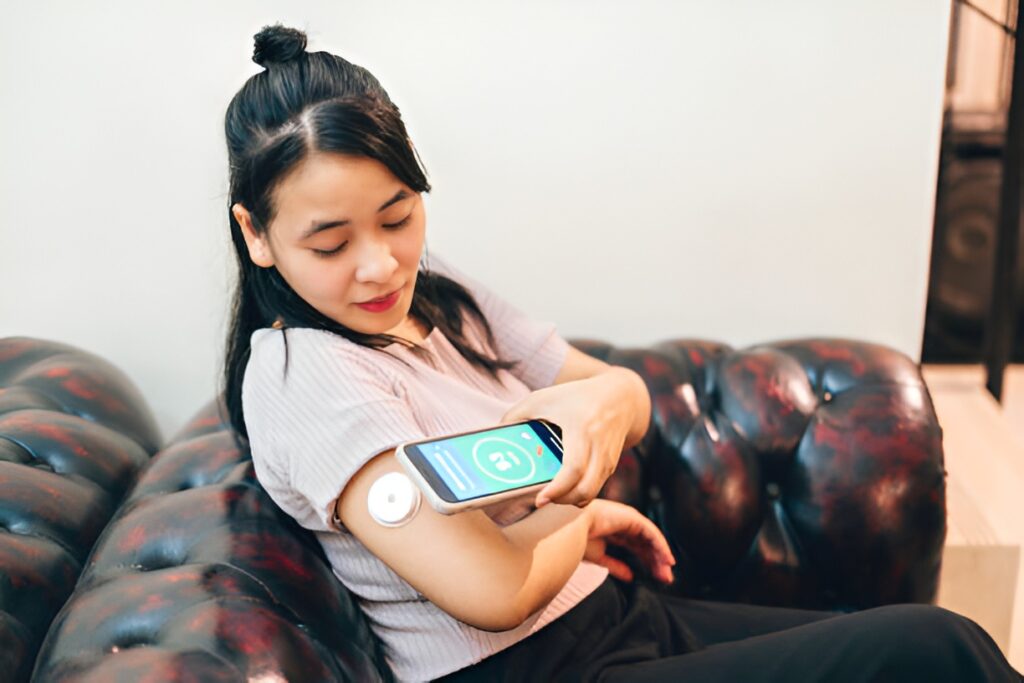
Most people managing their blood sugar are working from a single reading taken at one point in the day. A continuous glucose monitor changes that entirely, giving you a live picture of how your body responds to food, sleep, stress, and movement as it is actually happening.
That is what continuous glucose monitoring makes possible. For people managing diabetes or working to stay ahead of it, this level of visibility is changing how people understand what is happening in their own bodies.
How Does a CGM Actually Work?
A CGM (continuous glucose monitor) is a small, coin-sized sensor worn on the back of the upper arm. It measures glucose levels every few minutes and sends that data directly to your phone. You get a live graph showing how your blood sugar has moved through the day and overnight, and you can check it any time.
Blood sugar is not a fixed number. It shifts constantly depending on what you eat, how active you are, how well you slept, and even how stressful your day was. A single morning finger test gives you one reading from that whole story. A CGM shows you the full picture.
What it reveals can be genuinely surprising. You might find that the breakfast you have eaten for years is causing a glucose rise you never knew about. A 20-minute walk after dinner might bring your levels down better than any other adjustment you have tried. Your body may handle brown rice very differently from white rice. These are the kinds of discoveries that change daily habits in a lasting way.
What the Research Shows About CGM
The evidence behind CGM is strong and growing.
A 2025 study by the Ministry of Health Technology Assessment unit followed patients using CGM across Kuala Lumpur and Putrajaya. The findings were consistent: people reported feeling more in control, less anxious about their condition, and better equipped to make everyday health decisions. The results were strong enough to influence MOH recommendations for expanding CGM access to high-risk patients nationwide.
Research from other countries reflects the same findings. A 2025 review published in the Diabetes Metabolism Research and Reviews journal found that CGM helped patients spend more time within their healthy blood sugar range and bring down their HbA1c (a measure of average blood sugar levels over two to three months). A separate review of 26 clinical trials covering nearly 2,800 patients with Type 2 diabetes confirmed consistent improvements across the board.
One study focused on overweight young adults and used CGM alongside personalised nutrition guidance. Participants saw improvements in their blood sugar readings, HbA1c levels, body weight, and LDL cholesterol (the bad kind that raises heart risk). Importantly, this was done before any diabetes diagnosis had been made, showing how well CGM works as a prevention tool, not just a management one.
As one clinical review summarised it: patients who could see their glucose data in real time made better decisions about food and activity day to day. (PMC Clinical Applications Review, 2025)
Is CGM only for people with serious diabetes?
Not quite. This is one of the more common misconceptions about technology.
CGM started as a tool for people on insulin who needed close, continuous monitoring to avoid dangerous glucose swings. That role has expanded significantly. Today it is used across all stages of Type 2 diabetes (the form where the body either does not produce enough insulin or stops using it properly). It is also used by people with prediabetes, meaning blood sugar that is elevated but has not yet crossed the threshold for a full diagnosis, and by people who simply want to understand how their lifestyle affects their body.
Awareness is growing and access has improved. The MOH’s 2025 recommendations support wider use, and the technology is more available now than it has ever been.
How Seraya Health Uses CGM in Your Care Plan
At Seraya Health, CGM is where every care plan begins.
From day one, you have a live view of how your glucose responds to your meals, your sleep, and your daily routine. A physician reviews that data alongside your full medical history and builds your nutrition and supplement plan around what it actually shows, rather than a standard template.
The sensor gives you information. The care team helps you act on it.
If you want to explore this with a physician before committing to a plan, you can consult a doctor online through our telehealth platform and review your CGM patterns together in a single session. Everything is accessible digitally, and your physician is reviewing real data from your body, not a questionnaire.
Our goal is the same as yours: to give you a clear picture of what is happening and what is actually worth changing.
Seeing Your Glucose Is a Practical Place to Start
Whether you have been managing diabetes for years or you are only now beginning to pay attention to your numbers, CGM gives you something most health tools do not offer: a clear, ongoing picture of how your body is actually responding.
Small changes become visible. Patterns become easier to act on. And the choices you make about food, movement, and rest are no longer based on guesswork.
If you want to understand your glucose levels before a diagnosis brings them to your attention, now is a good time to find out where you stand.
Frequently Asked Questions
Q1. How long does a CGM sensor last?
Sensors typically last 14 to 15 days before replacement, depending on the device used.
Q2. Can CGM replace my regular blood tests?
CGM tracks real-time glucose trends. It complements, rather than replaces, blood tests such as HbA1c, which gives a longer-term average.
Q3. Do I need a diagnosis to use CGM through Seraya Health?
No. CGM is available for people at all stages, including those who want to understand their glucose before a diagnosis is made.
Key Takeaways
- A CGM tracks glucose every few minutes, giving you a continuous picture rather than a single snapshot
- Research shows CGM users spend more time in a healthy glucose range and achieve better HbA1c results
- CGM is used across Type 2 diabetes, prediabetes, and prevention — not only for insulin-dependent patients
- At Seraya Health, CGM data drives every care plan from day one
Explore Seraya Health’s glucose monitoring plans at serayahealth.com/services.